
How Accurate Are AI Face Shape Detectors? Why Results Differ
AI face shape detectors can provide a useful styling estimate, but photo angle, lighting, hair, expression, and mixed features all affect the result.
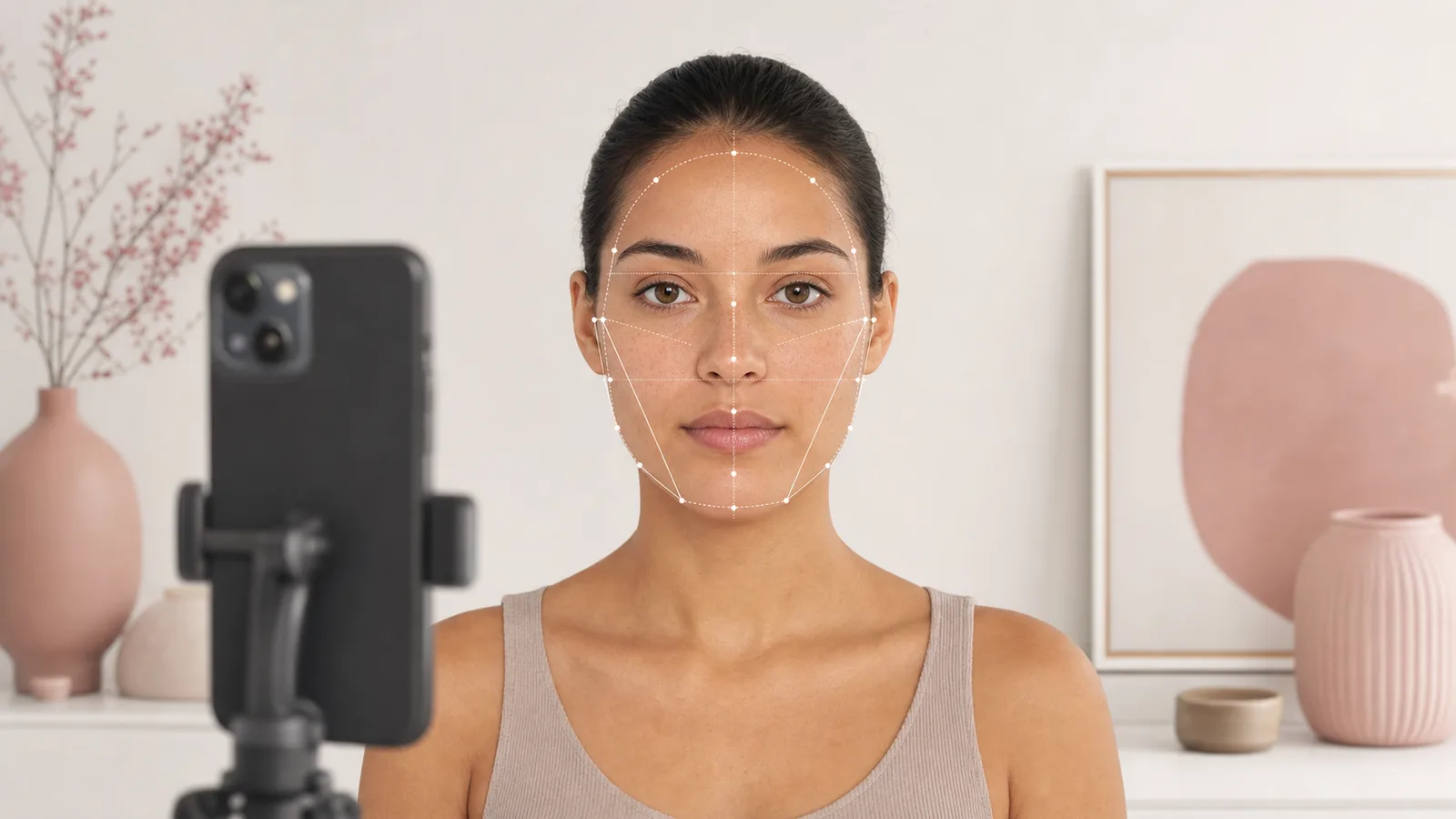
AI face shape detectors can provide a useful styling estimate, but they are not perfect measurements of your anatomy. A good detector evaluates visible proportions—such as forehead width, cheekbone width, jaw width, and face length—and assigns the closest shape category. The result can change when the photo changes or when your features sit between two categories.
That does not make the tool useless. It means the result is best treated as a well-informed starting point for hairstyles, glasses, and makeup—not as a medical assessment or an unchangeable fact about your appearance.
How Accurate Are AI Face Shape Detectors?
Accuracy depends on two things: how well the system interprets facial proportions and how clearly those proportions appear in the submitted photo. A centered, straight-on image with even lighting and an unobstructed facial outline gives the AI better evidence than a close, angled, filtered selfie.
My Face Shape Detector analyzes the primary face in the uploaded image and focuses on the hairline, forehead, cheekbones, jawline, and overall face length. It returns a best-fit category, a confidence level, an explanation, and styling ideas. Because categories such as oval, round, heart, and diamond can overlap, a responsible result may have medium or low confidence rather than pretending every face fits perfectly into one box.
Best interpretation: use the classification together with the explanation. “Heart” is more useful when the explanation also notes a wider forehead and tapered jaw that you can verify yourself.
Why Two Face Shape Detectors May Give Different Results
There is no single universal formula used by every styling guide or AI system. One system may emphasize the face's length-to-width relationship, while another gives more weight to the widest horizontal area or the angle of the jaw. Some systems also use different category names—for example, “pear” versus “triangle,” or “oblong” versus “rectangle.”
Even with the same categories, borderline faces create reasonable disagreement. A face with a slightly wider forehead, strong cheekbones, and a narrow chin might be described as heart-shaped by one system and diamond-heart by a stylist. The categories simplify a continuous range of human features.
The photo itself creates another source of variation. If you submit two images with different angles or lighting, the visible proportions are not identical—even though your underlying face has not changed.
Seven Photo Factors That Affect Your Result
1. Camera angle
Tilting the camera down can make the forehead appear larger and the chin smaller. Tilting it up can emphasize the jaw. Turning even slightly to one side changes the visible width and symmetry. Keep the lens directly in front of your face at eye level.
2. Distance and lens distortion
A phone held very close exaggerates whatever is nearest to the lens and can compress the outer edges of the face. Step back or place the phone on a stable surface, then crop the image if needed. A little distance usually produces more natural-looking proportions than an extreme close-up selfie.
3. Hair covering the outline
Bangs can hide forehead width, while long hair resting along the cheeks or jaw can create a false outer edge. Pull hair away from the forehead, temples, cheeks, and jaw. The AI needs to see the face itself, not the silhouette created by the hairstyle.
4. Facial hair
A full beard can make the jaw appear wider, longer, or squarer. If you want the result to reflect the visible face with your usual beard, leave it as is. If you want a closer estimate of the underlying structure, use a clean-shaven or closely trimmed photo when practical.
5. Lighting and shadows
Strong side light can carve out the cheekbones or jaw on one side. Overhead light can create deep shadows below the cheeks. Face a window or another broad, soft light source so both sides of the face are evenly visible.
6. Facial expression
A wide smile raises the cheeks and changes the lower-face outline. Pursed lips or a clenched jaw can also alter the visible proportions. Use a neutral, relaxed expression with lips resting naturally.
7. Filters, portrait effects, and retouching
Beauty filters may slim the jaw, enlarge the eyes, smooth the hairline, or subtly reshape the face. Portrait blur can erase fine edges around hair and cheeks. Use an unfiltered image with the entire face in focus.
The Best Photo for a Face Shape Detector
Use this quick checklist before uploading:
- Only one face is prominent in the frame.
- The head faces straight toward the camera without tilting.
- The camera is at eye level and a comfortable distance away.
- The entire hairline, both temples, both cheeks, the jaw, and the chin are visible.
- Light is soft and even across both sides of the face.
- The expression is neutral and relaxed.
- The image is sharp, unfiltered, and not heavily compressed.
Take two photos under the same conditions if you want to check consistency. If both produce the same category and similar explanations, you can be more confident that the visible proportions are clear.
How to Check the Result Manually
A manual check does not require calculating a perfect ratio. Compare four dimensions: forehead width, cheekbone width, jaw width, and face length. Then ask three questions:
- Where is the face widest? Forehead suggests heart; cheekbones may suggest diamond, oval, or round; jaw suggests pear or triangle.
- How does length compare with width? Similar dimensions lean round or square, while noticeably greater length leans oval or oblong.
- Is the jaw soft, tapered, or angular? This helps separate round from square and oval from oblong or diamond.
Our complete guide to the seven face shapes explains these patterns. If your result is heart or diamond, use the focused heart vs. diamond comparison to check the widest point.
What If You Get a Different Result Every Time?
First, standardize the photo rather than repeatedly testing unrelated selfies. Use the same lighting, distance, camera height, expression, and hairstyle. Retest once with a fresh straight-on photo.
Next, compare the explanations rather than only the labels. If one result says oval and another says oblong, both may be responding to a longer-than-wide face with fairly balanced widths. The disagreement may be about degree, not the underlying observation.
If results continue to alternate between two neighboring categories, you may genuinely have a blended shape. Use recommendations from both and keep the ones that work with your hair texture, frame fit, personal style, and comfort.
Are Face Shape Detectors a Medical or Beauty Assessment?
No. A face shape detector provides general styling information. It does not diagnose a condition, evaluate health, measure attractiveness, or determine whether a feature is “good” or “bad.” Human faces are naturally varied and asymmetrical, and a category is only a convenient description of visible proportions.
My Face Shape Detector's results are for informational and entertainment purposes. You can review how uploaded photos and analysis data are handled in the site's privacy policy.
Frequently Asked Questions
Can a selfie accurately determine my face shape?
It can provide a useful result if the selfie is taken straight on, from enough distance to avoid obvious distortion, with even light and the facial outline fully visible. A close or angled selfie is less reliable.
Why did one detector say oval and another say round?
Oval and round faces both have soft outlines. The main distinction is usually how much longer the face is than it is wide. A borderline proportion, full cheeks, camera distance, or a slightly tilted image can shift the best-fit label.
Do glasses affect face shape detection?
Glasses do not change the underlying shape, but large or bold frames can obscure the cheek and temple outline. Remove them for the clearest analysis when you can see safely without them.
Can weight loss or aging change my face shape?
Your bone structure remains a major influence, but changes in facial fullness and skin can change the visible outline. A styling-based classification can therefore look somewhat different over time.
Is manual measurement better than AI?
Neither method is automatically better. Manual measurement is transparent but sensitive to where you place the tape. AI is faster but sensitive to the photo and classification method. Using both is a practical way to investigate a close result.
Should I choose a hairstyle based only on face shape?
No. Face shape is one useful input alongside hair texture, density, hairline, maintenance preference, lifestyle, and the look you personally enjoy.
Try a More Consistent Analysis
Take a fresh photo using the checklist above, then try the free AI face shape detector. Review the confidence and explanation, compare the result with your own measurements, and use the recommendations as flexible ideas rather than rules.
Filed under
face-shapes
Editor, My Face Shape Detector
Brooke Tanner writes and edits the face shape guides on My Face Shape Detector, and checks the detector's classifications against the same measurement rules those guides describe.
Related face shape guides


Free AI Tool
Discover your face shape instantly
Upload a photo and get personalized style recommendations in seconds.
Back to Blog
8 min read